
Walls of Air: el Pabellón de Brasil en la 16th Bienal de Arquitectura de Venecia

En respuesta a la propuesta curatorial para la Bienal de Arquitectura de Venecia 2018, cuyo tema para esta edición es FREESPACE, la participación oficial de Brasil en Venecia ha sido nombrada Walls of Air.
mayo 07, 2018
Walls of Air: el Pabellón de Brasil en la 16th Bienal de Arquitectura de Venecia

Bajo la curaduría de los arquitectos seleccionados por la Fundação Bienal de São Paulo, Gabriel Kozlowski, Laura González Fierro, Marcelo Maia Rosa y Sol Camacho, la exposición se basa en las formas de leer, desafiar y transgredir los límites materiales e inmateriales de Brasil y su arquitectura. Al tiempo que entiende el muro como un elemento de identidad brasileña, la exposición explora el acto de violarlo como una invitación a celebrar la riqueza de la convivencia en lugar de la indiferencia de la coexistencia.

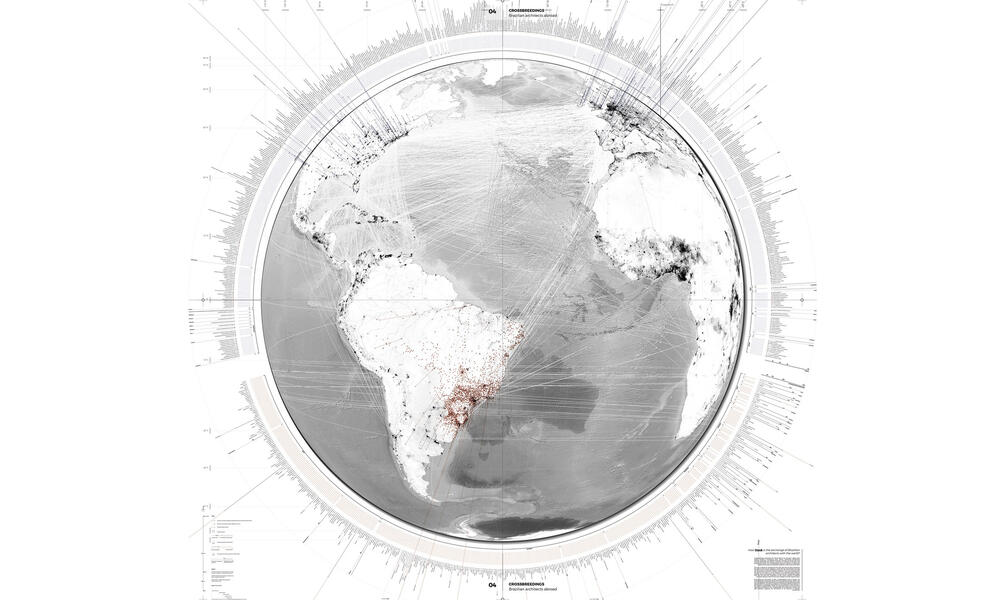
Walls of Air se organiza en dos frentes de diseño de exposiciones. El primero consiste en la presentación de diez correspondencias cartográficas creadas a partir de investigaciones desarrolladas con una red de colaboradores, consultores e instituciones, como una forma de visualizar las formas de separación espacial y conceptual que han resultado de los procesos de urbanización en Brasil. El segundo se centra en la arquitectura y los proyectos urbanos elegidos a través de una convocatoria abierta pública, el primero en la historia de la participación de Brasil en este evento. De los 289 proyectos presentados en más de 60 ciudades brasileñas, la curaduría seleccionó 17 ejemplos, diseñados por arquitectos locales reconocidos y más jóvenes, que reflexionan sobre la posibilidad de concebir la arquitectura como un medio para reconceptualizar las barreras encontradas en nuestras ciudades.

Con la selección de proyectos, los curadores pretenden presentar casos donde la arquitectura se despliega como un instrumento para la negociación de situaciones urbanas antagónicas y sensibles, al tiempo que ilustran una variedad de procesos que enfrentan los arquitectos durante el momento del diseño, que incluyen: transformación áreas privadas en espacios para uso público; conectando barrios aislados; unir divisiones urbanas generadas por grandes corredores de infraestructura; abrir nuevos frentes de la ciudad al mar; revitalizar comunidades vulnerables mediante la introducción de nuevos programas y viviendas sociales dignas; y mantener espacios para la cultura en barrios sometidos a una transformación drástica.

"Diversos en escalas y tipos, todos los proyectos representan formas intrigantes de mejorar la esfera pública mediante la rearticulación de las barreras físicas, sociales y políticas existentes en cada uno de sus contextos. Al mismo tiempo, las obras seleccionadas muestran el enorme desafío de construir y realizar proyectos de esta naturaleza en el Brasil contemporáneo ", explican los curadores.

Participantes y proyectos

Llamada abierta: Liberdade Boulevard - Corsi Hirano Arquitetos. Donde no ves dónde estás: Pedro Varella, Gru.a Arquitetos. Del plan al proyecto: SESC Parque Dom Pedro II - Laboratorio de Urbanismo de Metrópole / LUME FAUUSP, Una Arquitetos, H + F Arquitetos y Metrópole Arquitetos. Edificio Amata - Arquitectura Triptyque. Escuela sin muros: Centro Cultural Jardim Damasceno - Sem Muros Arquitetura Integrada. Faro de Maré - Pedro Évora. Instituto Brincante - Bernardes Arquitetura. Children Village - Rosenbaum + Aleph Zero. UNIFESP Osasco Student Housing - H + F Arquitetos. Vivienda del parque Novo Santo Amaro V - Vigliecca & Associados. Ilha Comprida frente al mar - Boldarini Arquitetos. Pirajussara 5 - Libeskindllovet Arquitetos, Jansana, de la Villa, de Paauw, arquitectes. Plaza para niños - Studio MK27. Programa Open Centralities - SP Urbanismo. Sesc Ribeirão Preto - SIAA + HASAA. Terreiro Oxumaré - Brasil Arquitetura. Cruces - sauermartins + Metropolitano Arquitetos.

Diseños cartográficos: el mapa no es el territorio; Sucesión de los bordes; Paisaje fluido; Cruces; Flujos humanos; Flujos de materiales; Geografía del mercado inmobiliario; ¿Habitar la casa o la ciudad? Divisiones sólidas; Encriptaciones de energía. Investigación desarrollada por los 4 curadores con: Gabriel Duarte, Pedro Camargo, Cota 760, Conselho Científico da Escola da Cidade, ETH Zurich, Global Forest Watch, Lab Cidade, MIT SA & P.


Walls of Air: Brazil Pavilion at the 16th Venice Architecture Biennale

In response to the curatorial proposal for the Venice Architecture Biennale 2018, whose theme for this edition is FREESPACE, Brazil’s official participation in Venice has been named Walls of Air.

Under the curatorship of the architects selected by the Fundação Bienal de São Paulo, Gabriel Kozlowski, Laura González Fierro, Marcelo Maia Rosa and Sol Camacho, the exhibition is built around the ways in which to read, challenge and transgress the material and immaterial boundaries of Brazil and its architecture. While understanding the wall as an element of Brazilian identity, the exhibition explores the act of breaching it as an invitation to celebrate the richness of cohabitation instead of the indifference of coexistence.

Walls of Air is organized on two exhibition design fronts. The first consists of the presentation of ten cartographic mappings created based on research developed with a network of collaborators, consultants and institutions, as a way of visualizing the forms of spatial and conceptual separation that have resulted from the Brazil’s urbanization processes. The second focuses on architecture and urban projects chosen through a public open call—first ever in the history of Brazil’s participation on this event. Out of the 289 projects submitted in over 60 Brazilian cities, the curatorship selected 17 examples, designed by both renowned and younger local architects, that reflect on the possibility of conceiving architecture as a means to re-conceptualize the barriers found within our cities.

With the selection of projects, the curators intend to present cases where architecture is deployed as an instrument for the negotiation of antagonistic, sensitive urban situations, while illustrating a variety of processes that are faced by architects during the moment of design, which include: transforming private areas into spaces for public use; connecting isolated neighborhoods; bridging urban divisions generated by large infrastructure corridors; opening new fronts of the city to the sea; revitalizing vulnerable communities by introducing new programs and decent social housing; and maintaining spaces for culture in neighborhoods undergoing drastic transformation.

"Diverse in scales and types, all projects represent intriguing ways of enhancing the public sphere by rearticulating the existing physical, social and political barriers present in each of their contexts. At the same time, the selected works show the enormous challenge of building and realizing projects of this nature in contemporary Brazil," explain the curators.

Participants and projects

Open Call: Liberdade Boulevard – Corsi Hirano Arquitetos. Where you don't see where you are – Pedro Varella, Gru.a Arquitetos. From the plan to the project: SESC Parque Dom Pedro II – Laboratório de Urbanismo da Metrópole / LUME FAUUSP, Una Arquitetos, H+F Arquitetos and Metrópole Arquitetos. Amata Building – Triptyque Architecture. School without walls: Jardim Damasceno Cultural Center – Sem Muros Arquitetura Integrada. Maré Lighthouse – Pedro Évora. Brincante Institute – Bernardes Arquitetura. Children Village – Rosenbaum + Aleph Zero. UNIFESP Osasco Student Housing – H+F Arquitetos. Novo Santo Amaro V Park Housing – Vigliecca & Associados. Ilha Comprida Seafront – Boldarini Arquitetos. Pirajussara 5 – Libeskindllovet Arquitetos, Jansana, de la Villa, de Paauw, arquitectes. Children square – Studio MK27. Open Centralities Program – SP Urbanismo. Sesc Ribeirão Preto – SIAA + HASAA. Terreiro Oxumaré – Brasil Arquitetura. Crossings – sauermartins + Metropolitano Arquitetos.

Cartographic Designs: The map is not the territorySuccession of edgesFluid landscapeCrossbreedingsHuman flowsMaterial flowsGeography of the Real Estate MarketInhabiting the house or the city?Solid DivisionsPower encryptions. Research developed by the 4 curators with: Gabriel Duarte, Pedro Camargo, Cota 760, Conselho Científico da Escola da Cidade, ETH Zurich, Global Forest Watch, Lab Cidade, MIT SA&P.

eZ debug

Timing: Feb 15 2026 00:58:50
Script start
Timing: Feb 15 2026 00:58:50
Module start 'content'
Timing: Feb 15 2026 00:58:50
Module end 'content'
Timing: Feb 15 2026 00:58:50
Script end

Main resources:

Total runtime0.0569 sec
Peak memory usage4,608.0000 KB
Database Queries75

Timing points:

CheckpointStart (sec)Duration (sec)Memory at start (KB)Memory used (KB)
Script start 0.00000.0061 911.9531641.5703
Module start 'content' 0.00610.0062 1,553.5234619.4531
Module end 'content' 0.01220.0446 2,172.97661,750.1172
Script end 0.0568  3,923.0938 

Time accumulators:

 Accumulator Duration (sec) Duration (%) Count Average (sec)
Ini load
Load cache0.00183.1493150.0001
Mysql Total
Database connection0.00081.360610.0008
Mysqli_queries0.017029.9010750.0002
Looping result0.00071.1825750.0000
TS translator
TS init0.00122.041030.0004
TS cache load0.00081.469630.0003
TS context load0.00071.274330.0002
Template Total0.044077.410.0440
Template load0.00091.575310.0009
Template processing0.043175.758710.0431
Template load and register function0.00010.124910.0001
Override
Cache load0.00050.861440.0001
Sytem overhead
Fetch class attribute name0.00061.141030.0002
Fetch class attribute can translate value0.00030.609930.0001
class_abstraction
Instantiating content class attribute0.00000.030230.0000
XML
Image XML parsing0.00284.991130.0009
states
state_id_array0.00111.988650.0002
state_identifier_array0.00152.694050.0003
General
dbfile0.00498.5554270.0002
String conversion0.00000.017620.0000
Note: percentages do not add up to 100% because some accumulators overlap

Time used to render debug report: 0.0003 secs